•  

China: Wedding Feast Carries On as Heavy Rain Floods Venue in Shaanxi

This unforgettable scene was captured in Weinan, Shaanxi Province, on May 18, 2026. It looks like a party on a river, but it’s actually an outdoor wedding feast. A sudden heavy downpour flooded the square with dozens of centimeters of water. Relatives and friends sit around dozens of round tables, watching the ceremony and waiting for the meal. Thankfully, the organizers set up cozy canopies and fences, keeping guests dry. Rain can’t stop love and blessings—everyone shows up in the storm to celebrate the newlyweds.

  •  

New Zealand: Landslide Hits Mount Maunganui 3

Six people, including two teenagers, are missing after a major landslide struck a local campground in Mount Maunganui on Thursday, January 22. Police are also seeking information on three others as search and rescue operations continue in a dangerous environment, with authorities describing the incident as a national tragedy and the community rallying to support affected families.

  •  

Philippines: Typhoon Kalmaegi Triggers Severe Flooding, Displacing Thousands 2

Severe flooding has submerged towns and displaced hundreds of thousands as Typhoon Kalmaegi battered the central Philippines. Rivers overflowed in Cebu and nearby islands, forcing residents onto rooftops while cars and containers were swept through the streets. Local officials said some evacuation centers were inundated, and many survivors of a recent earthquake had to be evacuated again. More than 380,000 people fled their homes across the Visayas, southern Luzon, and northern Mindanao. Kalmaegi, locally named Tino, made landfall late Monday, November 3 with winds of up to 130 kph before moving toward the South China Sea on Tuesday, November 4.

  •  
Nemrut's Ancient Statues - Turkey

Nemrut's Ancient Statues - Turkey

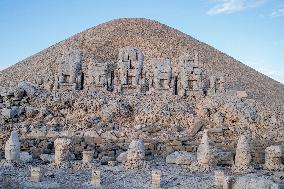
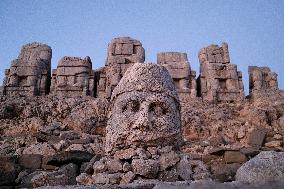
A view of the colossal stone heads at the summit of Mount Nemrut in Adiyaman, Turkey on October 29, 2025. The UNESCO World Heritage site features monumental sculptures built 2,000 years ago by the Kingdom of Commagene and attracts tens of thousands of visitors each year for its dramatic sunrise and sunset views. on October 29, 2025 in Adiyaman, Turkey. Photo by Bilal sequin/Middle East Images/ABACAPRESS.COM

  •  
Nemrut's Ancient Statues - Turkey

Nemrut's Ancient Statues - Turkey

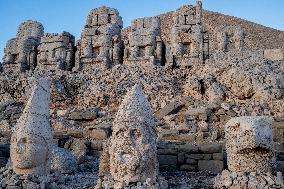
A view of the colossal stone heads at the summit of Mount Nemrut in Adiyaman, Turkey on October 29, 2025. The UNESCO World Heritage site features monumental sculptures built 2,000 years ago by the Kingdom of Commagene and attracts tens of thousands of visitors each year for its dramatic sunrise and sunset views. on October 29, 2025 in Adiyaman, Turkey. Photo by Bilal sequin/Middle East Images/ABACAPRESS.COM

  •  
Nemrut's Ancient Statues - Turkey

Nemrut's Ancient Statues - Turkey

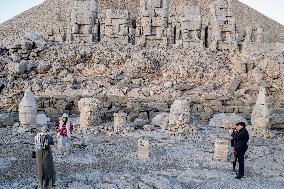
Tourists take photos among the colossal stone heads at the summit of Mount Nemrut in Adiyaman, Turkey on October 29, 2025. The UNESCO World Heritage site features monumental sculptures built 2,000 years ago by the Kingdom of Commagene and attracts tens of thousands of visitors each year for its dramatic sunrise and sunset views. on October 29, 2025 in Adiyaman, Turkey. Photo by Bilal sequin/Middle East Images/ABACAPRESS.COM

  •  
Nemrut's Ancient Statues - Turkey

Nemrut's Ancient Statues - Turkey

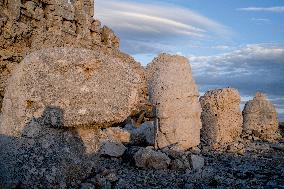
A view of the colossal stone heads at the summit of Mount Nemrut in Adiyaman, Turkey on October 29, 2025. The UNESCO World Heritage site features monumental sculptures built 2,000 years ago by the Kingdom of Commagene and attracts tens of thousands of visitors each year for its dramatic sunrise and sunset views. on October 29, 2025 in Adiyaman, Turkey. Photo by Bilal sequin/Middle East Images/ABACAPRESS.COM

  •  
Nemrut's Ancient Statues - Turkey

Nemrut's Ancient Statues - Turkey

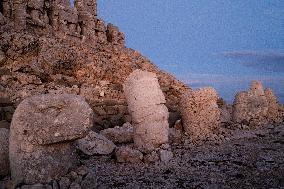
Colossal stone heads from ancient sculptures sit scattered among rocky terrain at the summit of Mount Nemrut in Adiyaman, Turkey on October 29, 2025. Located on the UNESCO World Heritage List, the archaeological site combines history and nature through statues built 2,000 years ago by the Kingdom of Commagene and draws tens of thousands of tourists annually for its sunrise and sunset views. on October 29, 2025 in Adiyaman, Turkey. Photo by Bilal sequin/Middle East Images/ABACAPRESS.COM

  •  
Nemrut's Ancient Statues - Turkey

Nemrut's Ancient Statues - Turkey

Colossal stone heads representing ancient deities sit on the terraces of Mount Nemrut in Adiyaman, Turkey on October 29, 2025. The UNESCO World Heritage site features monumental sculptures built 2,000 years ago by the Kingdom of Commagene at its 2,206-meter summit and is regularly photographed by tens of thousands of visitors drawn to its spectacular sunrise and sunset scenery. on October 29, 2025 in Adiyaman, Turkey. Photo by Bilal sequin/Middle East Images/ABACAPRESS.COM

  •  
Nemrut's Ancient Statues - Turkey

Nemrut's Ancient Statues - Turkey

Colossal stone heads from ancient sculptures sit scattered among rocky terrain at the summit of Mount Nemrut in Adiyaman, Turkey on October 29, 2025. Located on the UNESCO World Heritage List, the archaeological site combines history and nature through statues built 2,000 years ago by the Kingdom of Commagene and draws tens of thousands of tourists annually for its sunrise and sunset views. on October 29, 2025 in Adiyaman, Turkey. Photo by Bilal sequin/Middle East Images/ABACAPRESS.COM

  •  

China: Tourists and Locals Rescue Yaks from Mud Pit in Qinghai

In Qinghai, China, tourists and locals joined forces with an excavator operator to rescue four yaks stuck in deep mud on September 30, 2025. After spotting the trapped animals, the tourists alerted a herdsman and enlisted help from a nearby construction site. Working for nearly an hour, they freed all four yaks safely. The herdsman said the rescue prevented losses of over RMB 40,000.

  •  

US: North Dakota Sees Powerful Winds Amid Tornado-Producing Storm

Severe weather swept across the upper Midwest on Friday, June 20, bringing powerful winds and leaving at least 3 dead in North Dakota as a tornado ripped through the area.

  •  

China: Typhoon Wutip Darkens Hainan Skies Ahead of Landfall in Hainan

This is the terrifying moment a massive wall of dark clouds engulfed the skies over Hainan as Typhoon Wutip approached southern China. On June 11, 2025, in Hainan, China, video captured thick, menacing clouds rolling in ahead of Typhoon Wutip's landfall. The sky turned eerily dark as the season’s first typhoon neared, creating a heavy, ominous atmosphere. The storm made landfall around 11 p.m. on June 13 along the coast of Dongfang, a city in Hainan, with winds reaching up to 30 meters per second and a central pressure of 980 hPa. Heavy rain swept through southern parts of the island, with some areas experiencing torrential downpours and localized extreme rainfall. According to China National Radio, by June 15, Typhoon Wutip had weakened into a tropical depression after moving inland into Jiangxi Province, and continued to lose strength. The video ends with the storm clouds blanketing the landscape as residents brace for the typhoon’s impact.

  •  

Japan: Heavy Snowfall Hits Sea Of Japan Coast 4

Heavy snowfall has battered a wide area of Japan, especially the Hokuriku region along the Sea of Japan coast. This video shows blizzard conditions in the city Otaru, Hokkaido.

  •  

US: EF-1 Tornado Touches Down In Athens, AL, Leaving Devastating Damage

The National Weather Service in Huntsville has confirmed that an EF-1 tornado touched down in downtown Athens, Alabama, on Saturday night, December 28.

  •  

Philippines: Typhoon Yinxing Makes Landfall In Cagayan, Damaging Infrastructure 3

Typhoon Yinxing, known as Marce in the Philippines, made landfall near Santa Ana, Cagayan, on Thursday afternoon, November 7, forcing more than 21,000 people to evacuate and damaging two domestic airports and homes. Telecommunications and power supplies have remained down due to damaged cables and power lines, severely affecting residents in the affected areas.

  •  

Philippines: Typhoon Yinxing Makes Landfall In Cagayan, Damaging Infrastructure 2

Typhoon Yinxing, known as Marce in the Philippines, made landfall near Santa Ana, Cagayan, on Thursday afternoon, November 7, forcing more than 21,000 people to evacuate and damaging two domestic airports and homes. Telecommunications and power supplies have remained down due to damaged cables and power lines, severely affecting residents in the affected areas.

  •  
Iran Neyshabur Turquoise Mine

Iran Neyshabur Turquoise Mine

A craftsman carefully polishing a turquoise stone, shaping it for use in jewelry. The turquoise is extracted from the ancient Neishabur mines in Iran, which have been a source of this precious stone for thousands of years. Photo by Maya/Middle East Images/ABACAPRESS.COM

  •  

Thailand: Overflowing Of Ping River Causes Flooding In Chiang Mai Amid Rainy Season 3

Water levels in the Ping River rose, causing severe flooding across Chiang Mai on September 25 and affecting infrastructure. Small vehicles were stranded on flooded roads, and local shops and stalls were forced to close.

  •  

US: Glacial Lake Flooding Damages More Than 100 Homes In Juneau, Alaska

More than 100 homes in Juneau, Alaska, were damaged by flooding after a glacial lake overflowed, sending surging water to nearby neighborhoods. Gov. Mike Dunleavy declared a state disaster emergency on Tuesday, August 6, as the Mendenhall River reached record levels and flooded neighborhoods in Mendenhall Valley. There were no deaths or severe injuries reported.

  •  

US: Beryl Causes Widespread Power Outages And Flooding, Leaves Multiple Dead In Texas 4

Beryl has weakened into a tropical storm after making landfall as a category 1 hurricane near Matagorda in Texas, on Monday, July 8, shortly before 4 a.m. local time. The hurricane caused power outages and life-threatening flooding and left multiple dead in Houston and the surrounding areas.

  •  

US: Days-Long Winter Storm Dumps Heavy Snow On Sierra Nevada, Closing Roads, Schools

A days-long winter storm dumped heavy snow on the Sierra Nevada, closing major highways, ski resorts, and schools in parts of California. More than 10 feet of snow and hurricane-force wind gusts of 170 mph-plus were reported.

  •  

US: Strong Winter Storm Brings Blizzard Conditions To Sierra Nevada

A strong winter storm hit the Sierra Nevada on Friday, March 1, bringing heavy snow and high winds. Blizzard Warnings were issued for the Sierra, including Lake Tahoe and eastern Nevada. The Sierra Avalanche Center warned that the danger of avalanches was high. Yosemite National Park and many ski resorts in the region announced they were closing at least for the day.

  •  
CHINA-SICHUAN-ZIYANG-MENGXIHE SITE-ARCHAEOLOGICAL DISCOVERY (CN)

CHINA-SICHUAN-ZIYANG-MENGXIHE SITE-ARCHAEOLOGICAL DISCOVERY (CN)

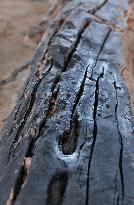
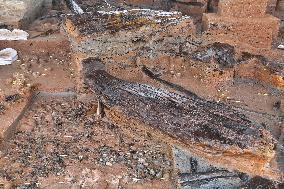
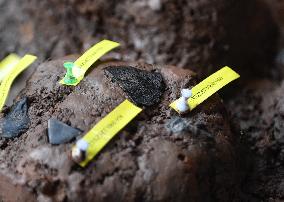
(240130) -- ZIYANG, Jan. 30, 2024 (Xinhua) -- This photo taken on Dec. 5, 2023 shows a piece of ebony unearthed at the Mengxihe Site in Lezhi County of Ziyang, southwest China's Sichuan Province. The Mengxihe Site was announced as one of the six most important archaeological findings of 2023 in China on Tuesday, according to the Sichuan Provincial Institute of Cultural Relics and Archaeology. The Mengxihe Site, dating back 50,000 to 70,000 years, has preserved a number of organic matter remains including animal fossils, ebony and plant seeds. A flood in the summer of 2019 unearthed ebony and animal fossils that had been buried underground for tens of thousands of years, as well as some stone tools used by ancient humans, said Zheng Zhexuan, an archaeologist at the institute. In 2023, more than 105,000 stone tools, wood tools, bone tools and animal fossils, as well as more than 60,000 relics such as plant seeds, fruits and spores were unearthed. Traces of fire, cutting, carving and polishing left by anci

  •  
CHINA-SICHUAN-ZIYANG-MENGXIHE SITE-ARCHAEOLOGICAL DISCOVERY (CN)

CHINA-SICHUAN-ZIYANG-MENGXIHE SITE-ARCHAEOLOGICAL DISCOVERY (CN)

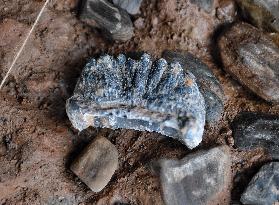
(240130) -- ZIYANG, Jan. 30, 2024 (Xinhua) -- This photo taken on Dec. 5, 2023 shows an elephant tooth unearthed at the Mengxihe Site in Lezhi County of Ziyang, southwest China's Sichuan Province. The Mengxihe Site was announced as one of the six most important archaeological findings of 2023 in China on Tuesday, according to the Sichuan Provincial Institute of Cultural Relics and Archaeology. The Mengxihe Site, dating back 50,000 to 70,000 years, has preserved a number of organic matter remains including animal fossils, ebony and plant seeds. A flood in the summer of 2019 unearthed ebony and animal fossils that had been buried underground for tens of thousands of years, as well as some stone tools used by ancient humans, said Zheng Zhexuan, an archaeologist at the institute. In 2023, more than 105,000 stone tools, wood tools, bone tools and animal fossils, as well as more than 60,000 relics such as plant seeds, fruits and spores were unearthed. Traces of fire, cutting, carving and polishing left by anc

  •  
CHINA-SICHUAN-ZIYANG-MENGXIHE SITE-ARCHAEOLOGICAL DISCOVERY (CN)

CHINA-SICHUAN-ZIYANG-MENGXIHE SITE-ARCHAEOLOGICAL DISCOVERY (CN)

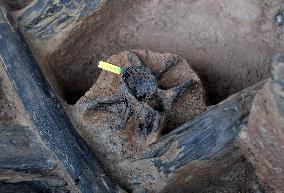
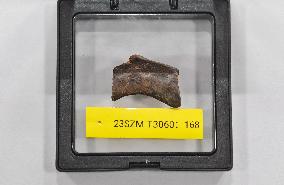
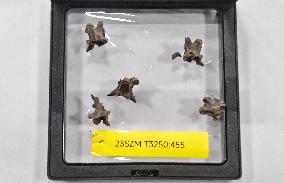
(240130) -- ZIYANG, Jan. 30, 2024 (Xinhua) -- This photo taken on Dec. 5, 2023 shows a piece of vertebra and pieces of ebony unearthed at the Mengxihe Site in Lezhi County of Ziyang, southwest China's Sichuan Province. The Mengxihe Site was announced as one of the six most important archaeological findings of 2023 in China on Tuesday, according to the Sichuan Provincial Institute of Cultural Relics and Archaeology. The Mengxihe Site, dating back 50,000 to 70,000 years, has preserved a number of organic matter remains including animal fossils, ebony and plant seeds. A flood in the summer of 2019 unearthed ebony and animal fossils that had been buried underground for tens of thousands of years, as well as some stone tools used by ancient humans, said Zheng Zhexuan, an archaeologist at the institute. In 2023, more than 105,000 stone tools, wood tools, bone tools and animal fossils, as well as more than 60,000 relics such as plant seeds, fruits and spores were unearthed. Traces of fire, cutting, carving and

  •  
CHINA-SICHUAN-ZIYANG-MENGXIHE SITE-ARCHAEOLOGICAL DISCOVERY (CN)

CHINA-SICHUAN-ZIYANG-MENGXIHE SITE-ARCHAEOLOGICAL DISCOVERY (CN)

(240130) -- ZIYANG, Jan. 30, 2024 (Xinhua) -- This photo taken on Dec. 5, 2023 shows a bone tool bearing a carved "X" mark, unearthed at the Mengxihe Site in Lezhi County of Ziyang, southwest China's Sichuan Province. The Mengxihe Site was announced as one of the six most important archaeological findings of 2023 in China on Tuesday, according to the Sichuan Provincial Institute of Cultural Relics and Archaeology. The Mengxihe Site, dating back 50,000 to 70,000 years, has preserved a number of organic matter remains including animal fossils, ebony and plant seeds. A flood in the summer of 2019 unearthed ebony and animal fossils that had been buried underground for tens of thousands of years, as well as some stone tools used by ancient humans, said Zheng Zhexuan, an archaeologist at the institute. In 2023, more than 105,000 stone tools, wood tools, bone tools and animal fossils, as well as more than 60,000 relics such as plant seeds, fruits and spores were unearthed. Traces of fire, cutting, carving and

  •  
CHINA-SICHUAN-ZIYANG-MENGXIHE SITE-ARCHAEOLOGICAL DISCOVERY (CN)

CHINA-SICHUAN-ZIYANG-MENGXIHE SITE-ARCHAEOLOGICAL DISCOVERY (CN)

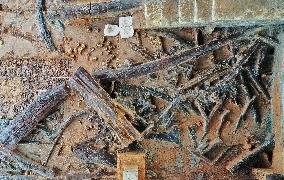
(240130) -- ZIYANG, Jan. 30, 2024 (Xinhua) -- An aerial drone photo taken on Dec. 5, 2023 shows pieces of ebony unearthed at the Mengxihe Site in Lezhi County of Ziyang, southwest China's Sichuan Province. The Mengxihe Site was announced as one of the six most important archaeological findings of 2023 in China on Tuesday, according to the Sichuan Provincial Institute of Cultural Relics and Archaeology. The Mengxihe Site, dating back 50,000 to 70,000 years, has preserved a number of organic matter remains including animal fossils, ebony and plant seeds. A flood in the summer of 2019 unearthed ebony and animal fossils that had been buried underground for tens of thousands of years, as well as some stone tools used by ancient humans, said Zheng Zhexuan, an archaeologist at the institute. In 2023, more than 105,000 stone tools, wood tools, bone tools and animal fossils, as well as more than 60,000 relics such as plant seeds, fruits and spores were unearthed. Traces of fire, cutting, carving and polishing le

  •  
CHINA-SICHUAN-ZIYANG-MENGXIHE SITE-ARCHAEOLOGICAL DISCOVERY (CN)

CHINA-SICHUAN-ZIYANG-MENGXIHE SITE-ARCHAEOLOGICAL DISCOVERY (CN)

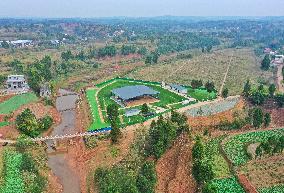
(240130) -- ZIYANG, Jan. 30, 2024 (Xinhua) -- An aerial drone photo taken on Dec. 5, 2023 shows a view of the Mengxihe Site in Lezhi County of Ziyang, southwest China's Sichuan Province. The Mengxihe Site was announced as one of the six most important archaeological findings of 2023 in China on Tuesday, according to the Sichuan Provincial Institute of Cultural Relics and Archaeology. The Mengxihe Site, dating back 50,000 to 70,000 years, has preserved a number of organic matter remains including animal fossils, ebony and plant seeds. A flood in the summer of 2019 unearthed ebony and animal fossils that had been buried underground for tens of thousands of years, as well as some stone tools used by ancient humans, said Zheng Zhexuan, an archaeologist at the institute. In 2023, more than 105,000 stone tools, wood tools, bone tools and animal fossils, as well as more than 60,000 relics such as plant seeds, fruits and spores were unearthed. Traces of fire, cutting, carving and polishing left by ancient human

  •  
CHINA-SICHUAN-ZIYANG-MENGXIHE SITE-ARCHAEOLOGICAL DISCOVERY (CN)

CHINA-SICHUAN-ZIYANG-MENGXIHE SITE-ARCHAEOLOGICAL DISCOVERY (CN)

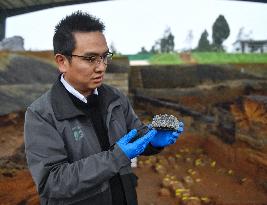
(240130) -- ZIYANG, Jan. 30, 2024 (Xinhua) -- Zheng Zhexuan, an archaeologist at the Sichuan Provincial Institute of Cultural Relics and Archaeology, shows an elephant tooth unearthed at the Mengxihe Site in Lezhi County of Ziyang, southwest China's Sichuan Province, Dec. 5, 2023. The Mengxihe Site was announced as one of the six most important archaeological findings of 2023 in China on Tuesday, according to the Sichuan Provincial Institute of Cultural Relics and Archaeology. The Mengxihe Site, dating back 50,000 to 70,000 years, has preserved a number of organic matter remains including animal fossils, ebony and plant seeds. A flood in the summer of 2019 unearthed ebony and animal fossils that had been buried underground for tens of thousands of years, as well as some stone tools used by ancient humans, said Zheng Zhexuan, an archaeologist at the institute. In 2023, more than 105,000 stone tools, wood tools, bone tools and animal fossils, as well as more than 60,000 relics such as plant seeds, fruits

  •  
CHINA-SICHUAN-ZIYANG-MENGXIHE SITE-ARCHAEOLOGICAL DISCOVERY (CN)

CHINA-SICHUAN-ZIYANG-MENGXIHE SITE-ARCHAEOLOGICAL DISCOVERY (CN)

(240130) -- ZIYANG, Jan. 30, 2024 (Xinhua) -- This photo taken on Dec. 5, 2023 shows a view of the Mengxihe Site in Lezhi County of Ziyang, southwest China's Sichuan Province. The Mengxihe Site was announced as one of the six most important archaeological findings of 2023 in China on Tuesday, according to the Sichuan Provincial Institute of Cultural Relics and Archaeology. The Mengxihe Site, dating back 50,000 to 70,000 years, has preserved a number of organic matter remains including animal fossils, ebony and plant seeds. A flood in the summer of 2019 unearthed ebony and animal fossils that had been buried underground for tens of thousands of years, as well as some stone tools used by ancient humans, said Zheng Zhexuan, an archaeologist at the institute. In 2023, more than 105,000 stone tools, wood tools, bone tools and animal fossils, as well as more than 60,000 relics such as plant seeds, fruits and spores were unearthed. Traces of fire, cutting, carving and polishing left by ancient human behavior w

  •  
CHINA-SICHUAN-ZIYANG-MENGXIHE SITE-ARCHAEOLOGICAL DISCOVERY (CN)

CHINA-SICHUAN-ZIYANG-MENGXIHE SITE-ARCHAEOLOGICAL DISCOVERY (CN)

(240130) -- ZIYANG, Jan. 30, 2024 (Xinhua) -- This photo taken on Dec. 5, 2023 shows pieces of snake bones unearthed at the Mengxihe Site in Lezhi County of Ziyang, southwest China's Sichuan Province. The Mengxihe Site was announced as one of the six most important archaeological findings of 2023 in China on Tuesday, according to the Sichuan Provincial Institute of Cultural Relics and Archaeology. The Mengxihe Site, dating back 50,000 to 70,000 years, has preserved a number of organic matter remains including animal fossils, ebony and plant seeds. A flood in the summer of 2019 unearthed ebony and animal fossils that had been buried underground for tens of thousands of years, as well as some stone tools used by ancient humans, said Zheng Zhexuan, an archaeologist at the institute. In 2023, more than 105,000 stone tools, wood tools, bone tools and animal fossils, as well as more than 60,000 relics such as plant seeds, fruits and spores were unearthed. Traces of fire, cutting, carving and polishing left by

  •  
CHINA-SICHUAN-ZIYANG-MENGXIHE SITE-ARCHAEOLOGICAL DISCOVERY (CN)

CHINA-SICHUAN-ZIYANG-MENGXIHE SITE-ARCHAEOLOGICAL DISCOVERY (CN)

(240130) -- ZIYANG, Jan. 30, 2024 (Xinhua) -- This photo taken on Dec. 5, 2023 shows a piece of turtle shell unearthed at the Mengxihe Site in Lezhi County of Ziyang, southwest China's Sichuan Province. The Mengxihe Site was announced as one of the six most important archaeological findings of 2023 in China on Tuesday, according to the Sichuan Provincial Institute of Cultural Relics and Archaeology. The Mengxihe Site, dating back 50,000 to 70,000 years, has preserved a number of organic matter remains including animal fossils, ebony and plant seeds. A flood in the summer of 2019 unearthed ebony and animal fossils that had been buried underground for tens of thousands of years, as well as some stone tools used by ancient humans, said Zheng Zhexuan, an archaeologist at the institute. In 2023, more than 105,000 stone tools, wood tools, bone tools and animal fossils, as well as more than 60,000 relics such as plant seeds, fruits and spores were unearthed. Traces of fire, cutting, carving and polishing left

  •  
(SKYEYE) CHINA-GANSU-YELLOW RIVER-AERIAL VIEW (CN)

(SKYEYE) CHINA-GANSU-YELLOW RIVER-AERIAL VIEW (CN)

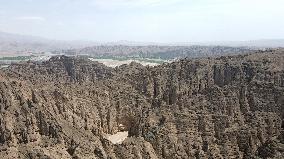
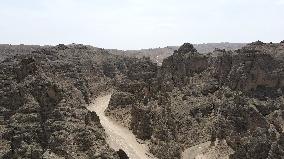
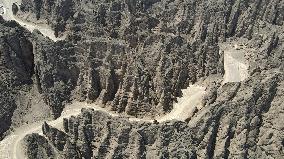
(230917) -- LANZHOU, Sept. 17, 2023 (Xinhua) -- This aerial photo taken on July 11, 2023 shows the Yellow River Stone Forest in Jingtai County of Baiyin City, northwest China's Gansu Province. The Yellow River, originating from the Bayan Har Mountains, meanders thousands of miles in Gansu. On both sides of the river, ancient cities, towns and villages formed and prospered, and became important guardians and inheritors of the Yellow River culture. In recent years, Gansu Province has continuously strengthened the preservation and revitalization of ancient cities, towns and villages along the Yellow River, protecting and repairing historical buildings and ancient dwellings. (Xinhua/Fang Xin)

  •  
(SKYEYE) CHINA-GANSU-YELLOW RIVER-AERIAL VIEW (CN)

(SKYEYE) CHINA-GANSU-YELLOW RIVER-AERIAL VIEW (CN)

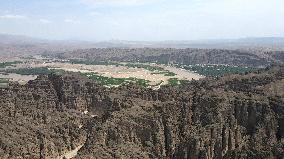
(230917) -- LANZHOU, Sept. 17, 2023 (Xinhua) -- This aerial photo taken on July 11, 2023 shows the Longwan Village and Yellow River Stone Forest in Jingtai County of Baiyin City, northwest China's Gansu Province. The Yellow River, originating from the Bayan Har Mountains, meanders thousands of miles in Gansu. On both sides of the river, ancient cities, towns and villages formed and prospered, and became important guardians and inheritors of the Yellow River culture. In recent years, Gansu Province has continuously strengthened the preservation and revitalization of ancient cities, towns and villages along the Yellow River, protecting and repairing historical buildings and ancient dwellings. (Xinhua/Chen Bin)

  •  
(SKYEYE) CHINA-GANSU-YELLOW RIVER-AERIAL VIEW (CN)

(SKYEYE) CHINA-GANSU-YELLOW RIVER-AERIAL VIEW (CN)

(230917) -- LANZHOU, Sept. 17, 2023 (Xinhua) -- This aerial photo taken on July 11, 2023 shows the Yellow River Stone Forest in Jingtai County of Baiyin City, northwest China's Gansu Province. The Yellow River, originating from the Bayan Har Mountains, meanders thousands of miles in Gansu. On both sides of the river, ancient cities, towns and villages formed and prospered, and became important guardians and inheritors of the Yellow River culture. In recent years, Gansu Province has continuously strengthened the preservation and revitalization of ancient cities, towns and villages along the Yellow River, protecting and repairing historical buildings and ancient dwellings. (Xinhua/Zhang Keren)

  •  
(SKYEYE) CHINA-GANSU-YELLOW RIVER-AERIAL VIEW (CN)

(SKYEYE) CHINA-GANSU-YELLOW RIVER-AERIAL VIEW (CN)

(230917) -- LANZHOU, Sept. 17, 2023 (Xinhua) -- This aerial photo taken on July 11, 2023 shows the Yellow River Stone Forest in Jingtai County of Baiyin City, northwest China's Gansu Province. The Yellow River, originating from the Bayan Har Mountains, meanders thousands of miles in Gansu. On both sides of the river, ancient cities, towns and villages formed and prospered, and became important guardians and inheritors of the Yellow River culture. In recent years, Gansu Province has continuously strengthened the preservation and revitalization of ancient cities, towns and villages along the Yellow River, protecting and repairing historical buildings and ancient dwellings. (Xinhua/Chen Bin)

  •  
Memorial service for unnamed dead in Kyoto

Memorial service for unnamed dead in Kyoto

People lit candles around thousands of stone Buddhist statues during a traditional memorial service to console the spirits of the unnamed dead at a temple in Kyoto on Aug. 26, 2023.

  •  
CHINA-YUNNAN-KUNMING-CENTURY-CHANGE (CN)

CHINA-YUNNAN-KUNMING-CENTURY-CHANGE (CN)

(230617) -- KUNMING, June 17, 2023 (Xinhua) -- Above: This undated file photo provided by Chinese photographer Yin Xiaojun shows a sutra pillar, a stone pillar inscribed with Buddhist scripture, about a century ago in Kunming, southwest China's Yunnan Province. Below: This photo taken on June 14, 2023 by Xinhua photographer Jiang Wenyao shows the sutra pillar displayed in Kunming Museum, which is built on the original site of the pillar, in Kunming, southwest China's Yunnan Province. French diplomat Auguste Francois came to Kunming in 1899. During his 5 years of stay in the city, He took thousands of photos with his 7 cameras. About a century later, with the efforts made by Chinese photographer Yin Xiaojun, some of these photos, together with pictures taken by others from 1896 to 1925, were published in China in 2017. From the contrast between these 12 old pictures of the landmarks in Kunming and photos taken by Xinhua photographers, people nowadays have a chance to get a glimpse of the changes taken pla

  •  

Kenya turns to Chinese-made electric buses for green transition

STORY: Kenya turns to Chinese-made electric buses for green transition DATELINE: Feb. 2, 2023 LENGTH: 0:02:37 LOCATION: Nairobi CATEGORY: ENTERTAINMENT SHOTLIST: 1. STANDUP (English): RUTH WANGARA, Xinhua correspondent 2. various of electric buses 3. SOUNDBITE 1 (English): MUTORO SIFUNA, Marketing manager, BasiGo 4. SOUNDBITE 2 (English): BETTY KILONZO, Passenger 5. various of electric buses 6. SOUNDBITE 3 (English): CHRISTOPHER MUIA, Chairman, Matatu Owners Association STORYLINE: STANDUP (English): RUTH WANGARA, Xinhua correspondent "This is a typical day in the roads of Nairobi, the Kenyan capital. I am standing at a roundabout in one of the main highways where thousands of cars ply this route on a daily basis, producing a great amount of carbon emissions, which makes the introduction of electric buses and cars that have zero tailpipe emissions a key stepping stone to cleaner air, decarbonization and fighting climate change." To reduce carbon emissions, Kenya is experiencing a massive transition from fo

  •  
CHINA-SHAANXI-SHIMAO RUINS (CN)

CHINA-SHAANXI-SHIMAO RUINS (CN)

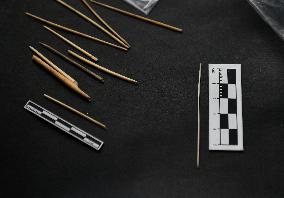
(220806) -- SHENMU, Aug. 6, 2022 (Xinhua) -- An archeologist shows a needle made of bone excavated from the Shimao ruins, an important prehistoric site in Shenmu City, northwest China's Shaanxi Province, Aug. 6, 2022. Shimao ruins, located in Shenmu of northwest China's Shaanxi Province, were a neolithic city built about 4,300 years ago and abandoned roughly 300 years later during the Xia Dynasty (2070-1600 B.C.), the first dynasty in China described in historical chronicles. Over the past 10 years, excavators have uncovered a stone city with immense fortifications and sophisticated infrastructure, thousands of luxurious artifacts and a 230-foot-high stepped pyramid. "The site's early date and peripheral location were surprising since Chinese civilization was thought to have first developed in the Central Plains around 500 years after Shimao's founding," read an article in the Archaeology journal. (Xinhua/Zhang Bowen)

  •  
CHINA-SHAANXI-SHIMAO RUINS (CN)

CHINA-SHAANXI-SHIMAO RUINS (CN)

(220806) -- SHENMU, Aug. 6, 2022 (Xinhua) -- An archeologist works at the Shimao ruins, an important prehistoric site in Shenmu City, northwest China's Shaanxi Province, Aug. 6, 2022. Shimao ruins, located in Shenmu of northwest China's Shaanxi Province, were a neolithic city built about 4,300 years ago and abandoned roughly 300 years later during the Xia Dynasty (2070-1600 B.C.), the first dynasty in China described in historical chronicles. Over the past 10 years, excavators have uncovered a stone city with immense fortifications and sophisticated infrastructure, thousands of luxurious artifacts and a 230-foot-high stepped pyramid. "The site's early date and peripheral location were surprising since Chinese civilization was thought to have first developed in the Central Plains around 500 years after Shimao's founding," read an article in the Archaeology journal. (Xinhua/Zhang Bowen)

  •  
CHINA-SHAANXI-SHIMAO RUINS (CN)

CHINA-SHAANXI-SHIMAO RUINS (CN)

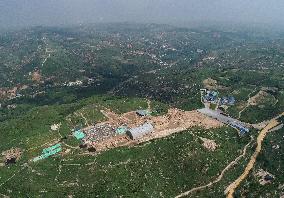
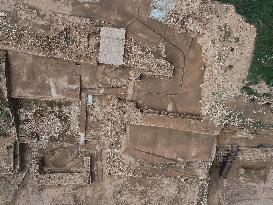
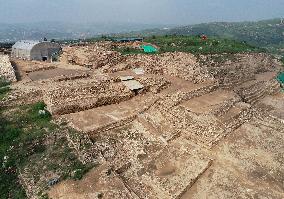
(220806) -- SHENMU, Aug. 6, 2022 (Xinhua) -- Aerial photo taken on Aug. 6, 2022 shows a view of the Shimao ruins, an important prehistoric site in Shenmu City, northwest China's Shaanxi Province. Shimao ruins, located in Shenmu of northwest China's Shaanxi Province, were a neolithic city built about 4,300 years ago and abandoned roughly 300 years later during the Xia Dynasty (2070-1600 B.C.), the first dynasty in China described in historical chronicles. Over the past 10 years, excavators have uncovered a stone city with immense fortifications and sophisticated infrastructure, thousands of luxurious artifacts and a 230-foot-high stepped pyramid. "The site's early date and peripheral location were surprising since Chinese civilization was thought to have first developed in the Central Plains around 500 years after Shimao's founding," read an article in the Archaeology journal. (Xinhua/Zhang Bowen)

  •  
CHINA-SHAANXI-SHIMAO RUINS (CN)

CHINA-SHAANXI-SHIMAO RUINS (CN)

(220806) -- SHENMU, Aug. 6, 2022 (Xinhua) -- Photo taken on Aug. 6, 2022 shows needles made of bone excavated from the Shimao ruins, an important prehistoric site in Shenmu City, northwest China's Shaanxi Province. Shimao ruins, located in Shenmu of northwest China's Shaanxi Province, were a neolithic city built about 4,300 years ago and abandoned roughly 300 years later during the Xia Dynasty (2070-1600 B.C.), the first dynasty in China described in historical chronicles. Over the past 10 years, excavators have uncovered a stone city with immense fortifications and sophisticated infrastructure, thousands of luxurious artifacts and a 230-foot-high stepped pyramid. "The site's early date and peripheral location were surprising since Chinese civilization was thought to have first developed in the Central Plains around 500 years after Shimao's founding," read an article in the Archaeology journal. (Xinhua/Zhang Bowen)

  •  
CHINA-SHAANXI-SHIMAO RUINS (CN)

CHINA-SHAANXI-SHIMAO RUINS (CN)

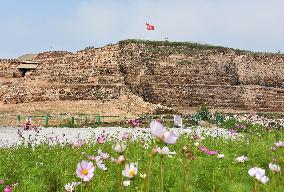
(220806) -- SHENMU, Aug. 6, 2022 (Xinhua) -- Photo taken on Aug. 6, 2022 shows a view of the Shimao ruins, an important prehistoric site in Shenmu City, northwest China's Shaanxi Province. Shimao ruins, located in Shenmu of northwest China's Shaanxi Province, were a neolithic city built about 4,300 years ago and abandoned roughly 300 years later during the Xia Dynasty (2070-1600 B.C.), the first dynasty in China described in historical chronicles. Over the past 10 years, excavators have uncovered a stone city with immense fortifications and sophisticated infrastructure, thousands of luxurious artifacts and a 230-foot-high stepped pyramid. "The site's early date and peripheral location were surprising since Chinese civilization was thought to have first developed in the Central Plains around 500 years after Shimao's founding," read an article in the Archaeology journal. (Xinhua/Yang Yimiao)

  •  
CHINA-SHAANXI-SHIMAO RUINS (CN)

CHINA-SHAANXI-SHIMAO RUINS (CN)

(220806) -- SHENMU, Aug. 6, 2022 (Xinhua) -- Aerial photo taken on Aug. 6, 2022 shows a view of the Shimao ruins, an important prehistoric site in Shenmu City, northwest China's Shaanxi Province. Shimao ruins, located in Shenmu of northwest China's Shaanxi Province, were a neolithic city built about 4,300 years ago and abandoned roughly 300 years later during the Xia Dynasty (2070-1600 B.C.), the first dynasty in China described in historical chronicles. Over the past 10 years, excavators have uncovered a stone city with immense fortifications and sophisticated infrastructure, thousands of luxurious artifacts and a 230-foot-high stepped pyramid. "The site's early date and peripheral location were surprising since Chinese civilization was thought to have first developed in the Central Plains around 500 years after Shimao's founding," read an article in the Archaeology journal. (Xinhua/Zhang Bowen)

  •  
CHINA-SHAANXI-SHIMAO RUINS (CN)

CHINA-SHAANXI-SHIMAO RUINS (CN)

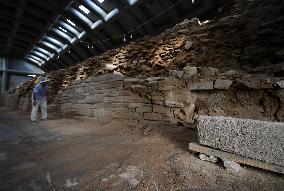
(220806) -- SHENMU, Aug. 6, 2022 (Xinhua) -- Photo taken on Aug. 6, 2022 shows the reinforcing wall at the Shimao ruins, an important prehistoric site in Shenmu City, northwest China's Shaanxi Province. Shimao ruins, located in Shenmu of northwest China's Shaanxi Province, were a neolithic city built about 4,300 years ago and abandoned roughly 300 years later during the Xia Dynasty (2070-1600 B.C.), the first dynasty in China described in historical chronicles. Over the past 10 years, excavators have uncovered a stone city with immense fortifications and sophisticated infrastructure, thousands of luxurious artifacts and a 230-foot-high stepped pyramid. "The site's early date and peripheral location were surprising since Chinese civilization was thought to have first developed in the Central Plains around 500 years after Shimao's founding," read an article in the Archaeology journal. (Xinhua/Zhang Bowen)

  •  
CHINA-SHAANXI-SHIMAO RUINS (CN)

CHINA-SHAANXI-SHIMAO RUINS (CN)

(220806) -- SHENMU, Aug. 6, 2022 (Xinhua) -- Aerial photo taken on Aug. 6, 2022 shows a view of the Shimao ruins, an important prehistoric site in Shenmu City, northwest China's Shaanxi Province. Shimao ruins, located in Shenmu of northwest China's Shaanxi Province, were a neolithic city built about 4,300 years ago and abandoned roughly 300 years later during the Xia Dynasty (2070-1600 B.C.), the first dynasty in China described in historical chronicles. Over the past 10 years, excavators have uncovered a stone city with immense fortifications and sophisticated infrastructure, thousands of luxurious artifacts and a 230-foot-high stepped pyramid. "The site's early date and peripheral location were surprising since Chinese civilization was thought to have first developed in the Central Plains around 500 years after Shimao's founding," read an article in the Archaeology journal. (Xinhua/Zhang Bowen)

  •  
CHINA-SHAANXI-SHIMAO RUINS (CN)

CHINA-SHAANXI-SHIMAO RUINS (CN)

(220806) -- SHENMU, Aug. 6, 2022 (Xinhua) -- Archeologists measure a recently-excavated stone carvings at the Shimao ruins, an important prehistoric site in Shenmu City, northwest China's Shaanxi Province, Aug. 6, 2022. Shimao ruins, located in Shenmu of northwest China's Shaanxi Province, were a neolithic city built about 4,300 years ago and abandoned roughly 300 years later during the Xia Dynasty (2070-1600 B.C.), the first dynasty in China described in historical chronicles. Over the past 10 years, excavators have uncovered a stone city with immense fortifications and sophisticated infrastructure, thousands of luxurious artifacts and a 230-foot-high stepped pyramid. "The site's early date and peripheral location were surprising since Chinese civilization was thought to have first developed in the Central Plains around 500 years after Shimao's founding," read an article in the Archaeology journal. (Xinhua/Zhang Bowen)

  •  
CHINA-SHAANXI-SHIMAO RUINS (CN)

CHINA-SHAANXI-SHIMAO RUINS (CN)

(220806) -- SHENMU, Aug. 6, 2022 (Xinhua) -- Photo taken on Aug. 6, 2022 shows stone carvings excavated from the Shimao ruins, an important prehistoric site in Shenmu City, northwest China's Shaanxi Province. Shimao ruins, located in Shenmu of northwest China's Shaanxi Province, were a neolithic city built about 4,300 years ago and abandoned roughly 300 years later during the Xia Dynasty (2070-1600 B.C.), the first dynasty in China described in historical chronicles. Over the past 10 years, excavators have uncovered a stone city with immense fortifications and sophisticated infrastructure, thousands of luxurious artifacts and a 230-foot-high stepped pyramid. "The site's early date and peripheral location were surprising since Chinese civilization was thought to have first developed in the Central Plains around 500 years after Shimao's founding," read an article in the Archaeology journal. (Xinhua/Yang Yimiao)

  • Main
  • Top
  • Editorial
  • Creative
  • About Us
  • About ILG
  • Terms of use
  • Company
  • BEHIND
  • Price List
  • Single Plan
  • Monthly Plan
  • Services
  • Shooting
  • Rights Clearance
  • Support
  • FAQ
  • How To Buy
  • Contact Us
  • Become a Partner

© KYODO NEWS IMAGES INC

All Rights Reserved.

  • Editorial
  • Olympics
  • News
  • Sports
  • Japan
  • Tech
  • Royal
  • Disaster
  • NorthKorea
  • Old Japan
  • SNS
  • Creative
  • Food
  • Japan
  • Landscape
  • Animal
  • Popular
  • #Ukraine
  • #Russia
  • #coronavirus
  • #N. Korea
  • #Thailand
  • #China
  • #Ukraine
  • #Russia
  • #coronavirus
  • #N. Korea
  • #Thailand
  • #China
  • Food
  • Japan
  • Landscape
  • Animal
  • Olympics
  • News
  • Sports
  • Japan
  • Tech
  • Royal
  • Disaster
  • NorthKorea
  • Old Japan
  • SNS